Learn my secrets to creating a successful online business with my holistic strategies and soulful marketing advice for heart-centered entrepreneurs who value relationships, mindfulness, spirituality and health as much as strategic action and practical tips.
LEARN MORE →




Success with Soul Incubator
Success with Soul Shop
Launch Your Dream Offer Mini Course
Our most popular posts to help you create, grow and monetize your online business with soul!
EXPLORE POSTS →
Income Reports
Passive Income
Increasing Traffic
Paid Ads vs Organic Social Media: Why These Are Not the Same Thing
January 19, 2026
Kate Kordsmeier



Last Updated on September 17, 2026
Paid ads vs organic social media aren’t the same thing. Here’s why and how to grow your business without living on social platforms.

Apparently, I’m a hypocrite. At least, that’s what a small but very passionate corner of the internet likes to tell me every time one of my ads shows up in their feed.
“You said you quit social media, so why are you running ads on Instagram?”
“Nice try, but you’re still on social.”
“Pick a lane.”
And look: on the surface, I get why this feels confusing. My face appears in a place you associate with scrolling, posting, liking, DMing, performing. So the assumption is: she must still be playing the game.
But here’s the thing (and this is the entire point of this post):
Running ads on social media is not the same thing as being on social media.
Not energetically. Not operationally. Not emotionally. Not strategically.
And definitely not in how it impacts your time, nervous system, or long-term business sustainability.
This isn’t a semantics argument. I’m not trying to win on a technicality. I’m trying to name a distinction that, once you see it, changes how you think about visibility, boundaries, and what it actually means to “show up” in your business.
Because what most people mean when they say “being on social media” isn’t where your message appears.
It’s how much of yourself the platform requires in return.
Organic social media asks for participation.
Paid ads ask for placement.
Those are not the same ask.
When I quit social media, I didn’t swear a blood oath to never let my words appear on a Meta-owned app ever again. I opted out of the relentless relational labor that organic social requires:
- The constant content treadmill
- The emotional whiplash of engagement (or lack thereof)
- The low-grade anxiety of “Should I be posting right now?”
- The expectation that access to my life, face, and energy was the price of visibility
What I kept was the part that actually does its job without draining me.
- I don’t scroll.
- I don’t post organically.
- I don’t check DMs.
- I don’t manage comments.
- I don’t perform for an algorithm.
I place a message.
A system delivers it.
And I go back to living my life and running my business.
Same platforms. Completely different relationship.
So if you’ve ever felt torn between “I want to get off social” and “I still need people to find me,” this conversation matters.
Because presence and participation are not the same thing. And once you stop conflating the two, a lot more becomes possible… with way less burnout.
Let’s talk about the difference.
Table of Contents
Why This Conversation Keeps Coming Up
Here’s why this question refuses to die:
We’re lumping all activity on the same platforms into one bucket and calling it “being on social media.”
Same app. Same screen. Same logo in the corner. So our brains go, welp, must be the same thing.
But that shortcut is doing a lot of damage.
Because when most people say “I’m exhausted by social media,” they’re not actually talking about the technology. They’re talking about the relationship they’ve been forced into with it.
They’re talking about:
- Feeling like they have to be “on” all the time
- Measuring their worth in likes, saves, and replies
- Second-guessing every post (“Is this helpful enough? Salesy? On-brand?”)
- Carrying the invisible mental load of content even when they’re offline
That’s not a platform problem.
That’s a participation problem.
But because ads and organic content live in the same physical space, we assume they come with the same cost.
They don’t.
We’ve been taught, explicitly and implicitly, that if you want visibility, you have to earn it through constant presence. Through consistency. Through personality. Through proximity.
So when someone opts out of that model but still reaches people, it short-circuits the narrative.
“If I had to suffer for my visibility, shouldn’t you?”
And that’s usually the unspoken charge hiding underneath the “hypocrite” accusation.
Because if running ads counts as “being on social,” then at least the rules stay intact:
- Everyone has to play.
- Everyone has to post.
- Everyone has to perform.
But if it doesn’t count, if it turns out you can separate visibility from constant participation, then we’re forced to confront a more uncomfortable truth:
👉 A lot of what we’ve been doing on social media isn’t required.
👉 It’s just what we were told was required.
And that’s why this conversation matters.
Not so we can argue definitions but so we can stop confusing exposure with entanglement.

The Core Distinction: Participation vs. Distribution
If you take nothing else from this post, let it be this:
Paid ads and organic social media are fundamentally different because they ask different things of you.
Not morally. Not philosophically. Operationally.
Organic social media is built on participation.
Paid advertising is built on distribution.
And those two modes come with wildly different costs.
Organic Social Media = Participation
When you’re “on social” in the way most people mean it, you’re not just placing content… you’re entering a relationship.
You’re expected to:
- Create content consistently
- Be responsive and available
- Engage in real time (or close enough)
- Share parts of your life, personality, and perspective
- Adapt constantly to trends, formats, and algorithm shifts
It’s relational. It’s ongoing. And it requires you… your attention, your energy, your emotional bandwidth.
Even when you’re not actively posting, it follows you.
There’s a low-level hum in the background:
Should I be sharing this?
Did I post enough this week?
Is my engagement down?
Organic social doesn’t just want your content. It wants your presence.
Paid Ads = Distribution
Ads don’t ask for presence. They ask for clarity.
You create a message once.
You decide who it’s for.
You set parameters.
And then a system delivers it.
No scrolling. No reacting. No performing. No tending to the relationship.
Ads are transactional by design. They exist to answer one question:
“Is this message relevant to this person right now?”
That’s it.
When I run ads, I’m not “showing up” in the social sense. I’m not participating in the ecosystem. I’m not building parasocial relationships or managing community dynamics.
I’m placing a sign in a space where people already are.
Same room. Completely different role.
Why This Difference Actually Matters
When people say they want to “quit social media,” what they’re usually craving isn’t invisibility.
It’s relief.
Relief from the constant demand to be seen, liked, relevant, responsive, and on.
Paid ads don’t require you to be any of those things.
They don’t care if you’re witty today. They don’t punish you for resting. They don’t ask for your face, your story, or your nervous system.
They just do the job they were designed to do.
And once you stop conflating participation with distribution, a lot of guilt falls away.
Because opting out of one does not mean you’ve opted out of the other.
Next, I want to make this distinction so obvious it’s almost impossible to argue with, using a few metaphors that tend to land even for the most skeptical minds.
The Metaphors That Make This Undeniable
Sometimes the fastest way to see the truth is to step outside the internet entirely.
Because when you remove the apps, the algorithms, and the emotionally charged opinions about “visibility,” this distinction becomes… kind of obvious.
Here are a few metaphors I’ve used over and over again (including in the comments of my own ads 🙃), because once people hear them, the argument usually collapses on itself.
1. A Highway Billboard vs. Driving the Highway

Putting up a billboard on the side of a highway does not mean you’re driving on that highway.
You’re not stuck in traffic. You’re not honking. You’re not watching your ETA creep up while someone cuts you off.
You’re simply placing a message in a location where people already are.
That’s what ads are.
Organic social media is driving the highway every day: white-knuckling the wheel, watching the algorithm “traffic report,” wondering if today’s commute will be smooth or a complete mess.
Same road. Wildly different experience.
2. A Radio Commercial vs. Listening to the Radio

When a business runs a radio commercial, the owner isn’t sitting in their car all day listening to every song, every ad break, every talk show.
They record the message once.
The station plays it.
Their job is done.
Running ads on social works the same way.
Organic social, on the other hand, is tuning in constantly: reacting, responding, engaging, staying “plugged in” so you don’t miss anything important.
Ads use the airwaves. Organic social lives on them.
3. A Magazine Ad vs. Reading the Magazine

Placing an ad in a magazine doesn’t mean you’re flipping through every page, reading every article, or participating in the editor’s letter discourse.
You’re present in the publication without being immersed in it.
Your message shows up. You don’t have to.
That’s the part people keep skipping over.
4. A Movie Trailer vs. Watching the Movie
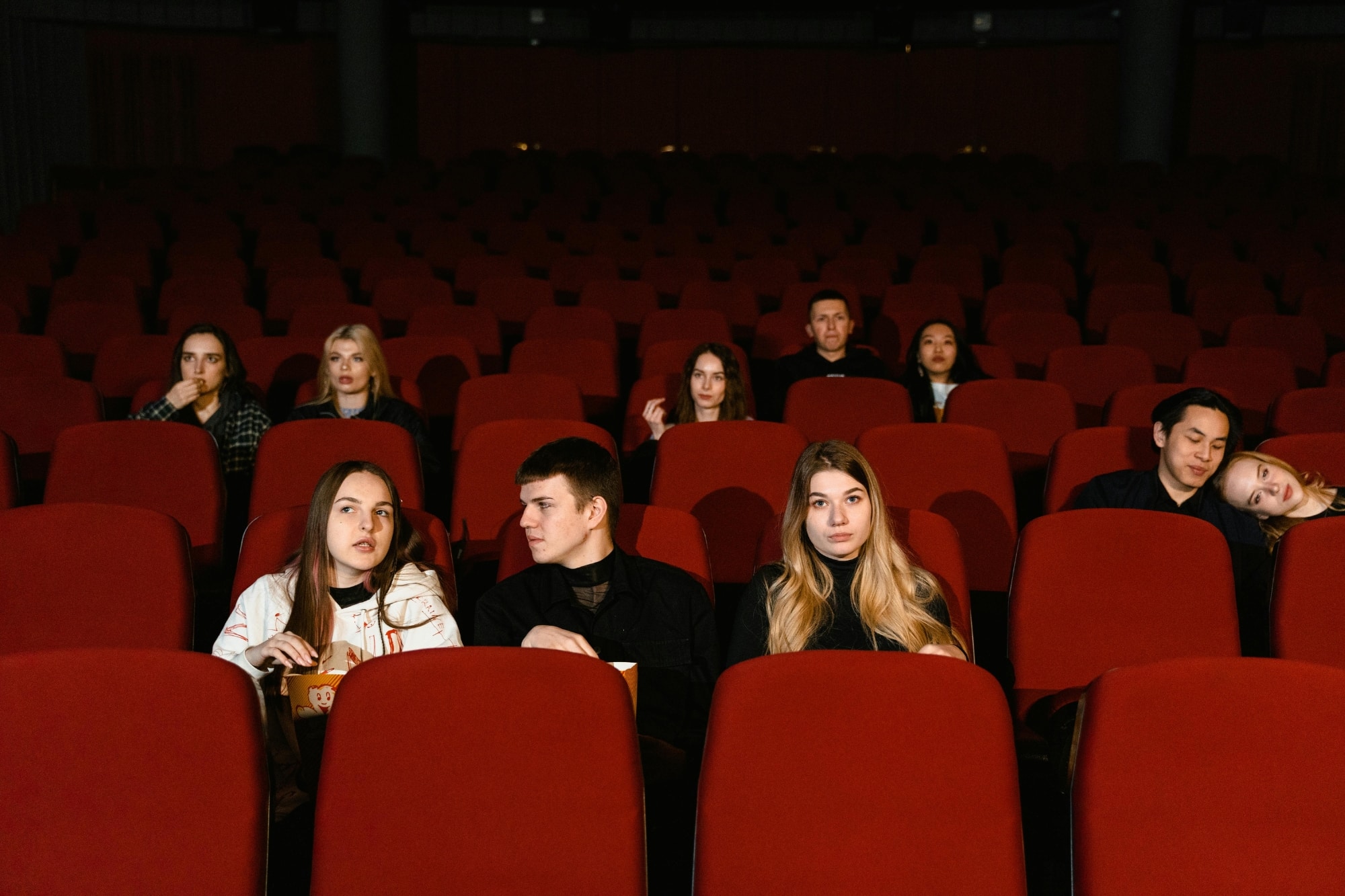
A trailer runs before the film. It reaches everyone in the theater.
But the people who made the trailer aren’t sitting in the audience, laughing at the jokes, crying at the ending, or staying for the post-credits scene.
They’re using the venue, not joining the experience.
That’s ads.
Organic social is buying a ticket, finding your seat, and committing to the whole emotional arc.
5. An Airport Announcement vs. Traveling
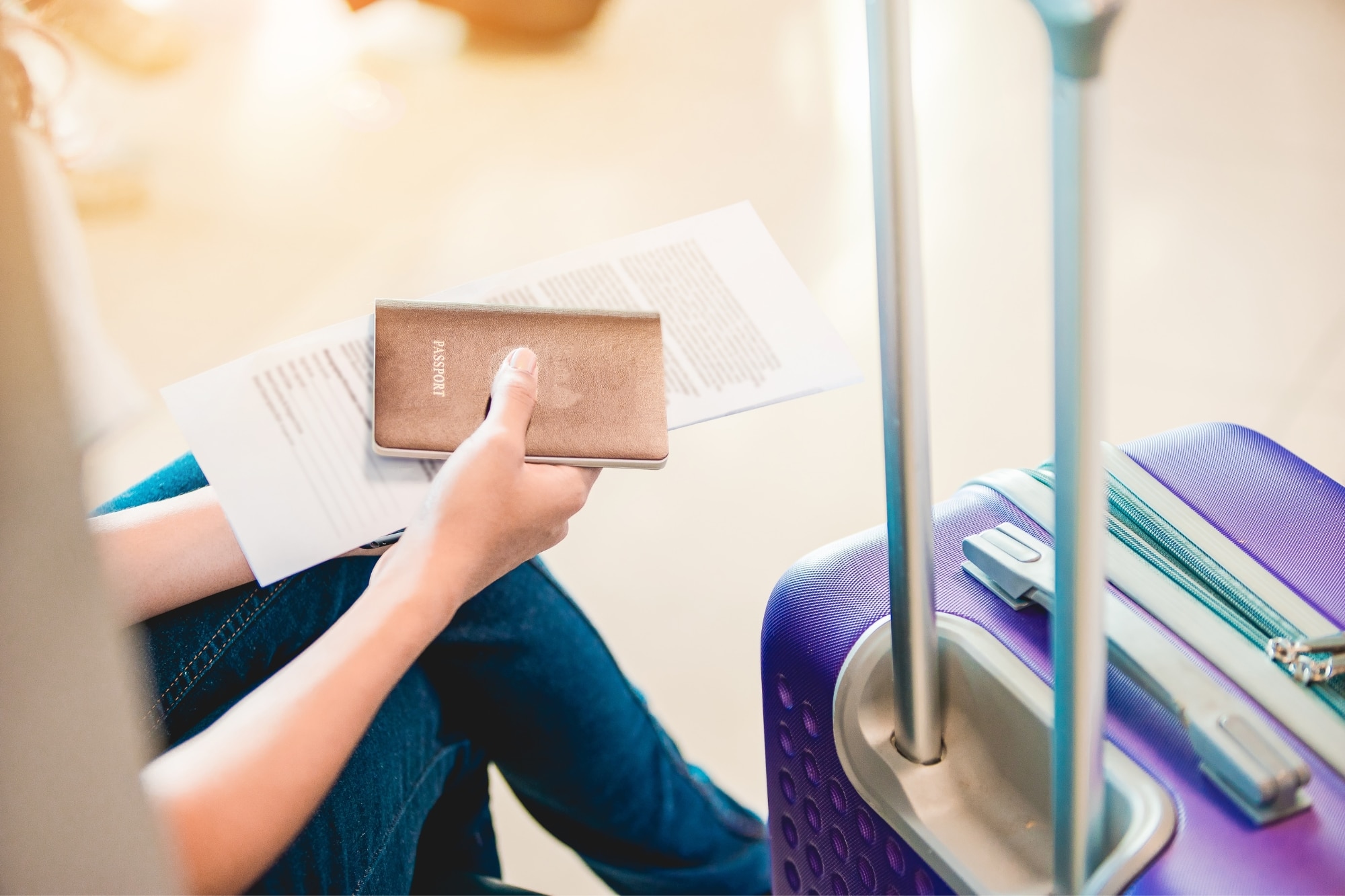
An announcement over the airport intercom reaches everyone in the terminal.
But the person who recorded it isn’t:
- Standing in the TSA line
- Dragging a carry-on
- Sprinting to gate B27
They’re communicating with travelers without being one.
Ads broadcast. Organic social participates.
“But Isn’t That Still Social Media?”
(aka: The Common Objections, Answered)
At this point in the conversation, a few predictable objections usually pop up. So let’s address them directly (not defensively, not snarky)… just honestly.
Objection #1: “Your content still appears on social media.”
Yes. It does.
And billboards appear on highways. Radio ads appear between songs. Magazine ads appear next to articles.
Visibility has never required participation.
What’s actually being argued here isn’t where my message appears… it’s whether my presence is required in exchange for that visibility.
And it’s not.
My ads appear. I do not.
No scrolling. No engaging. No hanging out. No emotional labor attached.
So the better question isn’t “Does your content show up there?”
It’s “What does it cost you to make it show up?”
Those are very different questions.
Objection #2: “You’re still benefiting from the platform.”
Correct. And that’s not hypocrisy, that’s boundaries.
Using a tool intentionally is not the same as letting it use you.
We don’t accuse business owners of being morally inconsistent for:
- Running Google ads without hanging out in Google Search all day
- Buying podcast sponsorships without listening to every episode
- Sending email campaigns without replying to every inbox message in real time
Somehow, social media is the only channel where we’ve decided suffering is the entry fee.
That if you didn’t grind for the visibility, you didn’t earn it.
I don’t subscribe to that belief.
Objection #3: “This feels like a loophole.”
Here’s the reframe that matters:
It’s not a loophole. It’s a different business model.
One that separates:
- Distribution from identity
- Visibility from availability
- Marketing from constant performance
Ads are not a sneaky workaround to avoid “doing the work.”
They are the work… just a kind that’s finite, strategic, and doesn’t require me to be emotionally entangled with an algorithm.
And honestly? The fact that this feels like cheating to some people says more about how normalized burnout has become than anything else.
The Question Underneath All of This
If running ads still “counts” as being on social… then what people are really saying is:
“If I had to exhaust myself for visibility, you should have to as well.”
But exhaustion is not a business requirement.
And resentment is not a marketing strategy.
The moment you stop equating visibility with self-sacrifice, the entire conversation changes.
If You Want a Quieter Way to Grow, This Is Your Invitation
If this post gave you that deep exhale feeling: the “oh… maybe I’m not broken” realization, I want you to hear this clearly:
You’re not wrong for wanting a business that doesn’t require constant visibility. You’re not lazy for craving fewer apps and more peace.
And you’re not unrealistic for wanting growth that doesn’t come at the expense of your nervous system.
There is another way to do this.
If you’re curious what it looks like to:
Here are a few places you can start, depending on what you need most right now:
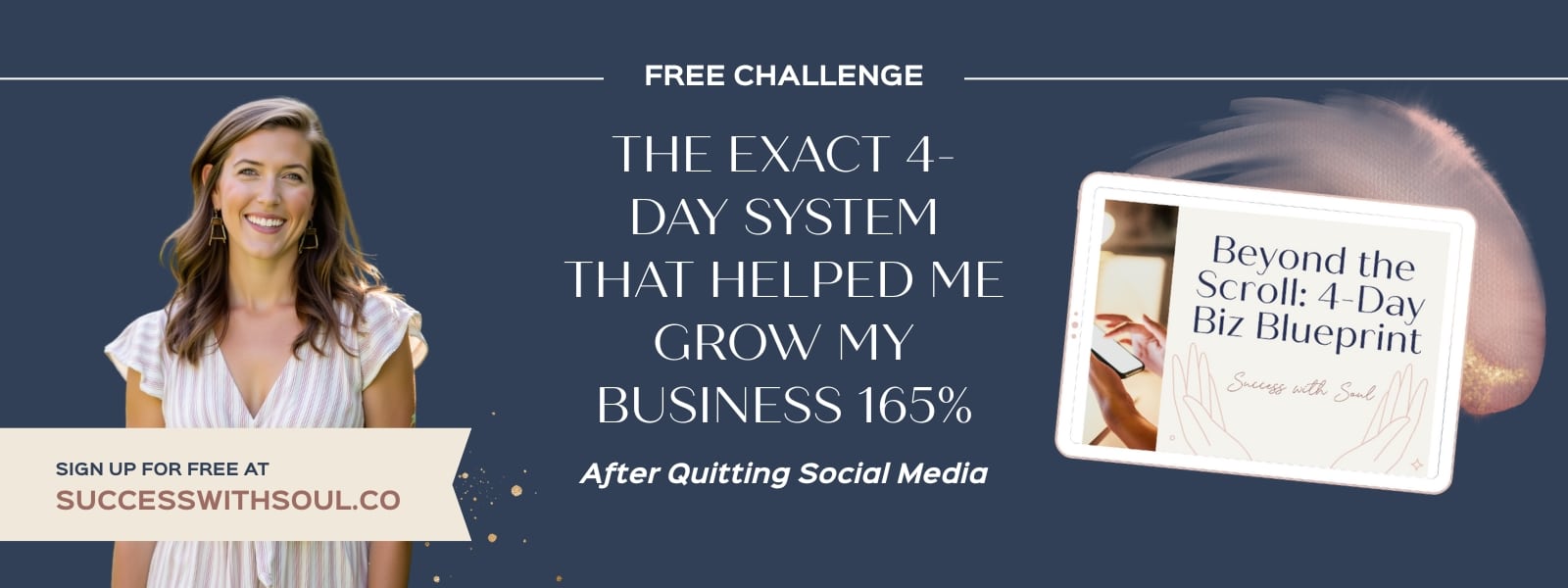
✨ Beyond the Scroll Free Challenge
If you’re still side-eyeing this whole idea and thinking, “Okay…but will this actually work for me?” — this is your no-pressure way to see the systems in action, get clarity, and test a quieter approach before committing to anything bigger.
✨ The Room
And if you’re ready for ongoing support, accountability, and real conversations about building a business without burning yourself out… this is where we do that work together. Weekly calls. Smart systems. Zero algorithm worship.
Frequently Asked Questions: Paid Ads vs Organic Social Media
Is running paid ads the same as being on social media?
No. Running paid ads is not the same as being “on” social media.
Paid ads are a distribution strategy: you place a message, a system delivers it, and the interaction ends. Being on social media typically refers to ongoing participation, like posting regularly, engaging in comments, replying to DMs, and managing a personal presence.
Same platforms. Completely different roles.
Can you say you quit social media if you still run ads on Instagram or Facebook?
Yes. Quitting social media means opting out of organic participation: scrolling, posting, engaging, and performing for an algorithm. Running ads does not require any of that.
You can step away from the content treadmill while still using paid ads as a marketing channel, just like businesses advertise on radio, TV, or websites they don’t personally engage with.
Why do people think running ads is hypocritical?
Because visibility and participation are often confused.
Many people assume that if your content appears on a social platform, you must be actively participating in that space. But presence does not equal participation.
Ads allow visibility without constant availability, emotional labor, or ongoing engagement, which challenges the belief that visibility must be earned through hustle.
Do paid ads require less time than organic social media?
In most cases, yes.
Organic social media often requires:
– Daily or near-daily content creation
– Ongoing engagement and responsiveness
– Constant adaptation to trends and algorithm changes
Paid ads typically require:
– One-time content creation
– Periodic optimization
– Minimal ongoing management
This makes ads far more scalable and sustainable for many business owners.
Are paid ads less authentic than organic social media?
No, authenticity comes from clarity, not frequency.
Paid ads can be just as honest, helpful, and values-aligned as organic content. The difference is that ads don’t require constant personal access to you in order to work.
You can communicate clearly and authentically without sharing your life daily or performing online.
Can you grow a business without organic social media?
Yes, I’m proof of that.
You can grow using:
– Paid ads
– Email marketing
– SEO and blog content
– Evergreen funnels
– Partnerships and referrals
Organic social media is one option, not a requirement.
Is organic social media bad or wrong?
Not at all.
Organic social media can be powerful for some people and some seasons. The issue isn’t the platform… it’s the assumption that everyone must use it the same way, all the time.
This post isn’t about demonizing social media. It’s about choice, boundaries, and sustainability.



FEELING OVERWHELMED?
There’s only one way to eat an elephant (hint: one bite at a time!) and our 30-step roadmap to starting an online business will help you check things off your to do list like a pro!
YES, PLEASE!