Launch Your Dream Offer Mini Course
Success with Soul Shop
Success with Soul Incubator
LEARN MORE →
Learn my secrets to creating a successful online business with my holistic strategies and soulful marketing advice for heart-centered entrepreneurs who value relationships, mindfulness, spirituality and health as much as strategic action and practical tips.
Increasing Traffic
Passive Income
Income Reports
EXPLORE POSTS →
Our most popular posts to help you create, grow and monetize your online business with soul!
Looking for something?
share:
This post may contain affiliate links. Read about our privacy policy.
Last Updated on September 18, 2025
Struggling with slow business growth? Learn to diagnose traffic vs. offer problems and follow our 30-day visibility plan for sustainable growth.

Table of Contents
Slow Business Growth? What If the Problem Isn’t Your Offer at All?
Let’s be honest: nothing tests your confidence like pouring your soul into a product… and getting zero traction. You launch. You post. You send a few emails. And then? Crickets.
So you start spiraling.
“Should I lower the price? Rebuild my funnel? Scrap the whole thing and start over?”
Sound familiar? You’re not broken. You’re not behind. And you’re definitely not alone.
Here’s the truth: slow business growth is not a sign of failure—it’s the norm. And 9 times out of 10, it’s not because your offer is broken. It’s because not enough people have seen it yet.
Why Is Slow Business Growth Normal (and Even Healthy)?
We live in a culture obsessed with “overnight success” stories.
The founder who scaled to $1M in 18 months. The influencer who sold out her course in 48 hours. The TikTok star who went viral and quit her job the next day.
But for most entrepreneurs, growth looks less like a rocket launch and more like a long, winding road trip.
- According to FreshBooks, most businesses take 2–3 years to become profitable (sometimes longer).
- Nearly half of all businesses plateau or close within 5 years—not because they’re bad, but because visibility takes time. (Bureau of Labor Statistics)
- Even world-class sales funnels convert at just 2–5%. (HubSpot/SeedProd) That means you need 100 people to see your offer before you even know if it’s working. Want actual numbers? Best case, it means that you’ll get 5 sales for every hundred people who see your page.
If things feel like they’re moving slower than you’d hoped, that doesn’t mean you’re failing. It means you’re right on schedule.
Growth that lasts is rarely fast. It’s more like a garden than a lottery ticket—planting, watering, pruning, waiting, and trusting roots you can’t yet see.
Here’s the upside nobody tells you: slow growth often builds stronger businesses.
When growth comes at a steady pace, you actually have time to:
- refine your systems; helping you build a more soulful and sustainable business
- improve delivery; meaning less stress for you AND your clients
- deeply understand your customers so you can serve them better
Instead of sprinting from fire drill to fire drill, you’re able to build processes that scale sustainably.
Fast growth looks sexy on Instagram—but behind the scenes, it can burn people out, break operations, and tank client experience. Harvard Business Review has reported that “hypergrowth” companies often collapse because they scaled before they were ready. Slower growth, on the other hand, gives you space to hire the right team, train them well, and create infrastructure that can actually support the revenue you want long-term.
Think of it like strength training: adding 5 pounds at a time makes you stronger and less injury-prone than loading 200 pounds on day one. In the same way, slow growth builds business “muscle memory” that keeps your company healthy enough to handle bigger wins when they come.
🚦 From Slow Growth to Smart Diagnosis: Is It Traffic or Your Offer?
Here’s the thing: slow business growth isn’t automatically bad. In fact, it’s often the natural rhythm of a healthy, sustainable business. But when growth feels glacial, the million-dollar question is: what’s causing the slowdown?
Think of it like going to the doctor. If you feel run-down, you don’t just start taking random medicine—you need to know whether it’s the flu or just dehydration. In business, the diagnosis comes down to this: is it your offer, or is it your traffic?
And here’s the tough love:
Nine times out of ten, it’s traffic.
Put simply, you don’t need a new funnel or a shinier logo. You need more eyeballs on the thing you already have.
We see this constantly inside The Room and when we actually look at the numbers, the “broken” funnel usually tells a different story:
- One coach was ready to redo her entire sales page. The problem? Only 17 people had seen it. That’s not a conversion crisis—that’s just not enough eyeballs.
- Another entrepreneur assumed her evergreen program had “stopped working.” In reality, she hadn’t driven fresh traffic to it in three months.
As I like to remind clients:
“You can’t optimize what no one sees.” – Kate Kordsmeier
What Is the Burnout-Tweak Spiral (and Why Does It Keep You Stuck)?
Here’s the vicious cycle so many entrepreneurs get caught in:
- You create something amazing
- You promote it a little
- Sales are slow (because no one knows it exists yet)
- You assume it’s not good enough
- You tweak it—or worse, you start over
- You reset the clock. Again.
- Repeat. Forever.
What follows is usually a flurry of changes—messaging revamps, pricing experiments, new lead magnets—all without ever giving the original offer time to breathe.
We’ve seen this with dozens of our clients, across industries.
This loop keeps you in “startup mode” indefinitely—and robs you of the data you need to actually test and refine what’s working.
The truth? It’s rarely the offer. It’s the visibility.
How Do You Know If It’s a Traffic Problem or an Offer Problem?
Before you scrap your funnel or spend another weekend reworking your sales page, pause and run this quick self-diagnosis.
1. Have enough people actually seen the offer?
This is the first filter.
- If fewer than 100 people have visited your sales page, you don’t have enough data to call it an “offer problem.”
- Remember: even a high-converting page at 5% means only 5 sales per 100 views. If you’re testing with 17 views, the silence isn’t failure—it’s statistics.
👉 If traffic is under 100 views → It’s a traffic problem.
🧠 Mindset shift: What story am I telling myself about slow growth? What am I making it mean?
2. Am I attracting the right people, or just anyone?
If you’re getting traffic but still not seeing sales, check the quality of that traffic.
- Are your visitors coming from random freebies, broad ads, or misaligned platforms?
- Or are they warm leads already primed for your solution?
👉 If traffic is high but unqualified → It’s still a traffic problem.
We teach you how to define your ideal client, double down on your niche, and position yourself with your unique differentiators inside our $9/month membership the Launch Lab.
3. Do people who see it say “yes”… at least sometimes?
If you’ve had 200+ qualified visitors and literally zero conversions, okay—that’s when you start looking at your offer.
- Is the positioning clear?
- Is the pricing aligned with the value?
- Are you solving a pain your audience actually wants solved?
👉 If traffic is substantial and conversions are still zero → It may be an offer problem.
🧠 Mindset shift: What would I do differently if I believed it was working?
Quick Rule of Thumb
- Low traffic? → Traffic problem.
- High but unqualified traffic? → Traffic problem.
- High, qualified traffic and zero conversions? → Offer problem.
This way, instead of spiraling into the Burnout-Tweak Spiral, you can calmly assess what’s really happening and adjust from there.

What Is the 30-Day Visibility Experiment (and How Do You Run It)?
Inside The Room, we guide clients through the magic trio—3 actions to take every week over a 30-90 day experiment to test if slow growth is a traffic issue.
Here are the 3 actions in the Magic Trio to take each week:
1) Publish one long-form, search-friendly piece each week
A single blog post, podcast episode with show notes, or YouTube video with a transcript can keep feeding your audience—and search engines—for months or even years. When you create one piece of long-form, search-first content each week, you’re not just “posting.” You’re building digital assets that compound over time, pulling in new leads while you sleep.
Search friendly content includes:
- Blog posts (optimized around long-tail keywords your ideal client is Googling).
- Podcast episodes + full show notes (Google can’t “hear” audio, but it can read transcripts).
- YouTube videos + keyword-rich descriptions (the #2 search engine in the world).
Pro tip: Optimize one post; repurpose into a newsletter or post in your social free community.
We teach you how to do this inside our Anti-Social SEO course which includes our Custom GPT Sage to make content creation even easier!

2) Send one offer-driven email each week
Most entrepreneurs treat their email list like a pen pal: they send value-packed newsletters, share tips, maybe link a blog post—and then wonder why nobody buys.
Your subscribers don’t need more free content. They need clear invitations.
That’s where your weekly offer-driven email comes in. It’s not “salesy.” It’s service. You’re giving people who already raised their hand and said “I’m interested” a chance to go deeper with you.
What this looks like in practice:
- Subject lines that spark curiosity and urgency:
- “2 spots this month: want one?”
- “Quick question—do you want help with [result]?”
- “Read this if your growth feels slow”
- Body copy that speaks to problems, solutions, and/or results that uses compelling copy and that shows more than tells.
- One clear call to action: reply, book a call, or buy now—pick one.
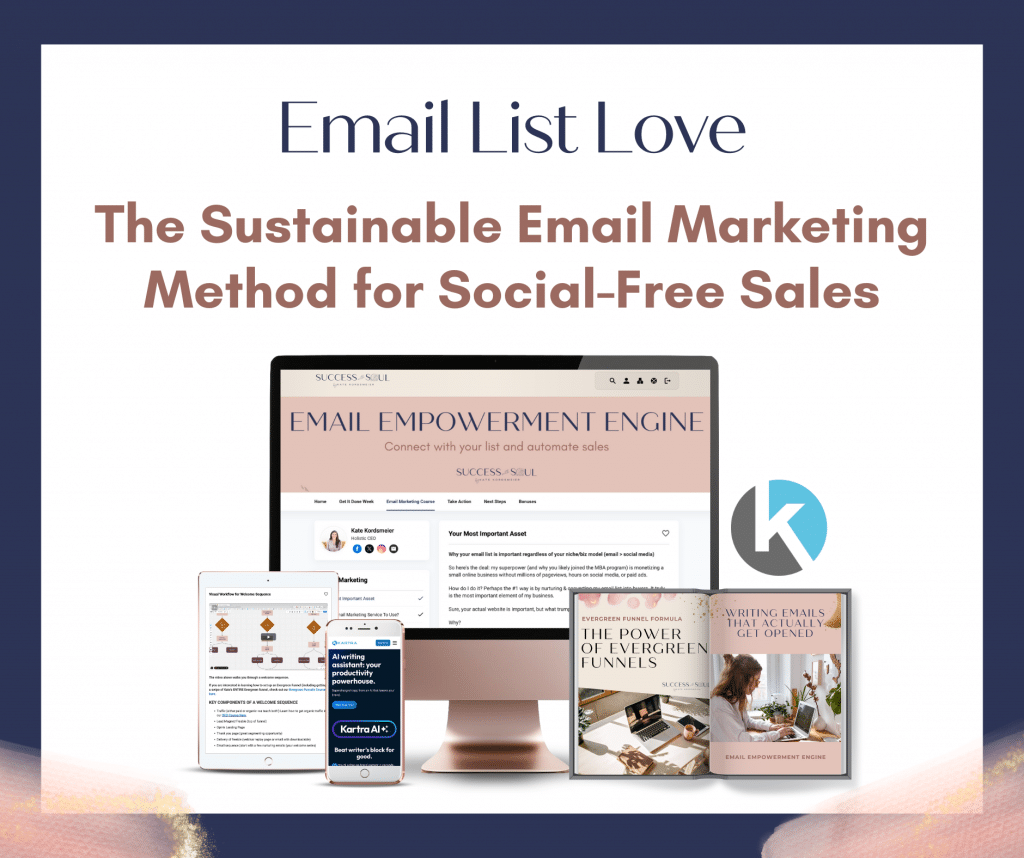
We teach you all about email marketing including how to sell AND nurture your email list inside our Email List Love course!
We teach this strategy because every email is a chance to:
- Remind people you exist (in case they forgot since last week).
- Show them you understand their struggle (slower growth, stuck traffic, stalled offers).
- Make it ridiculously easy to take the next step with you.
Think of your offer emails like opening the door each week. If someone’s ready to walk through, they will. If they’re not, they’ll stay on your list until they are. Either way—you’ve done your job by keeping the door open.
3) Pitch yourself once per week
Aim for one visibility opportunity every single week. That could look like:
- Affiliate partnerships (where someone else promotes your offer because it genuinely complements theirs).
- Podcasts (your story, your expertise, your frameworks—served to someone else’s warm audience).
- Bundles or summits (borrowed credibility and fresh leads without ads).
- Newsletter features (guest emails or swaps that get you in inboxes you didn’t have to grow yourself).
- JV webinars or collabs (live teaching for a partner’s list, with a clear CTA to your offer).
- Guest blogs or articles (evergreen SEO traffic from someone else’s platform).
The point isn’t perfection. The point is consistency.
One pitch a week = 52 chances a year for someone new to discover your brilliance. Even if half say no (they won’t), that’s still two dozen new stages you’ve shown up on without dancing for the algorithm once.
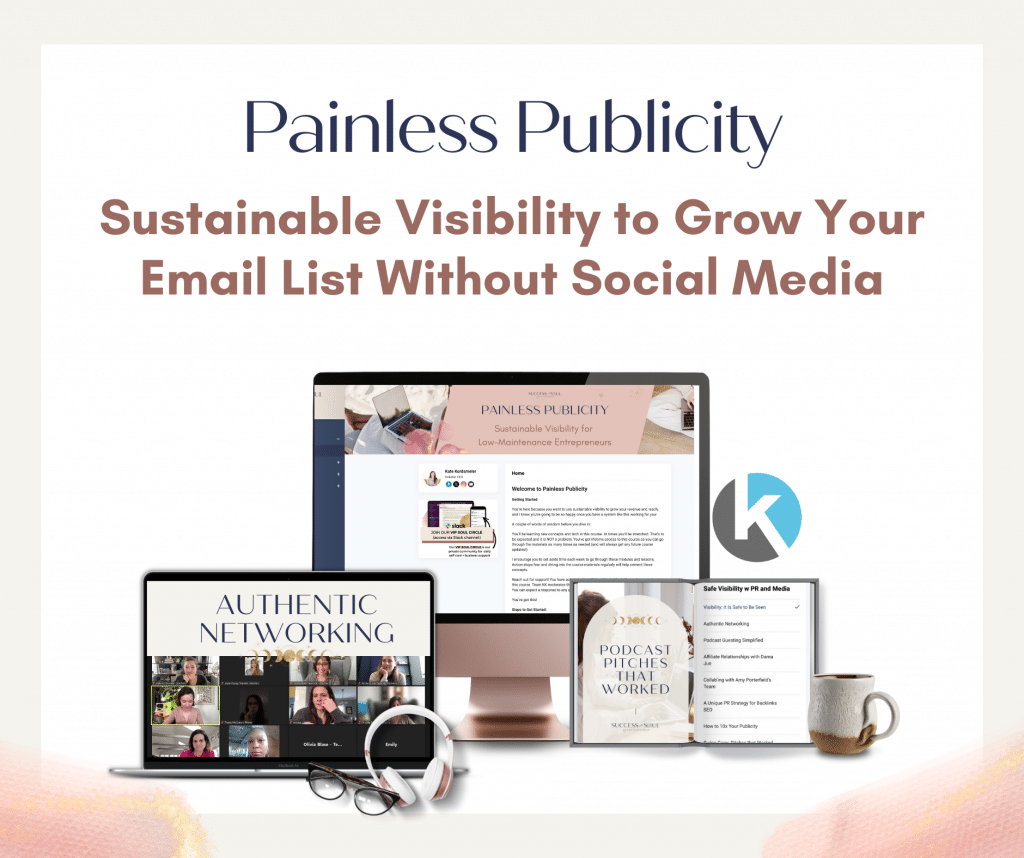
We teach you how to do this inside our Painless Publicity Course (bonus: no social media required!)
How Do You Know If Your Visibility Plan Is Working?
The whole point of the Visibility Experiment is to stop guessing and let the data tell you what’s really happening. But you need to know what to track—and how to interpret it.
What to Track Weekly
- Sales page views (unique visitors): How many people are actually seeing your offer?
- Traffic sources: Where are they coming from (search, partner collab, podcast, email, social)?
- Conversions: How many sales, booked calls, or applications came directly from that traffic?
- Number of new leads: How many new people did you add to your list?
These numbers tell you the story: how many people saw your offer, how they got there, and what they did once they arrived.
The Rule of Thumb for Diagnosing Results
- <200 qualified views + low/no sales → Traffic Problem
You don’t have enough eyeballs yet. Don’t tweak the offer—keep promoting. - 200–400 qualified views + 0 sales → Offer Problem
Now you’ve got enough traffic to see a pattern. If no one is buying, it’s time to look at your messaging, positioning, pricing, or promise. - 200–400 qualified views + 2–10 sales → It’s Working
You’re converting at industry-standard levels (2–5%). That means your offer resonates. The next step is scaling visibility—getting more people in the door.
Pro Tip: Look for Micro-Signals
Sales aren’t the only sign something is working. Pay attention to:
- More people replying to your emails.
- Discovery calls being booked.
- Leads saying, “I’ve been binging your podcast/blog posts.”
- A spike in list growth.
These are all signals your visibility efforts are compounding—even before the sales roll in.
Bottom Line: Slow Business Growth Doesn’t Mean Broken Growth
If your business feels like it’s moving slower than you hoped, take a deep breath: you’re not failing, you’re just building something real. Slow growth is normal. In fact, it’s often the healthiest kind of growth—because it gives you time to refine, improve, and scale sustainably.
The real work isn’t in burning your funnel down or constantly tweaking your offer. It’s in getting more eyes on what you’ve already built. Because nine times out of ten, what looks like an “offer problem” is really a traffic problem.
That’s why the 30-Day Visibility Experiment works—it forces you to stop spiraling, stop second-guessing, and start running the only test that matters: can more people find you, and do they say yes when they do?
So instead of tearing it all down, commit to 30 days of visibility: publish, email, pitch. Keep showing up. Let the numbers tell you what’s really happening.
And if you want support running that experiment?
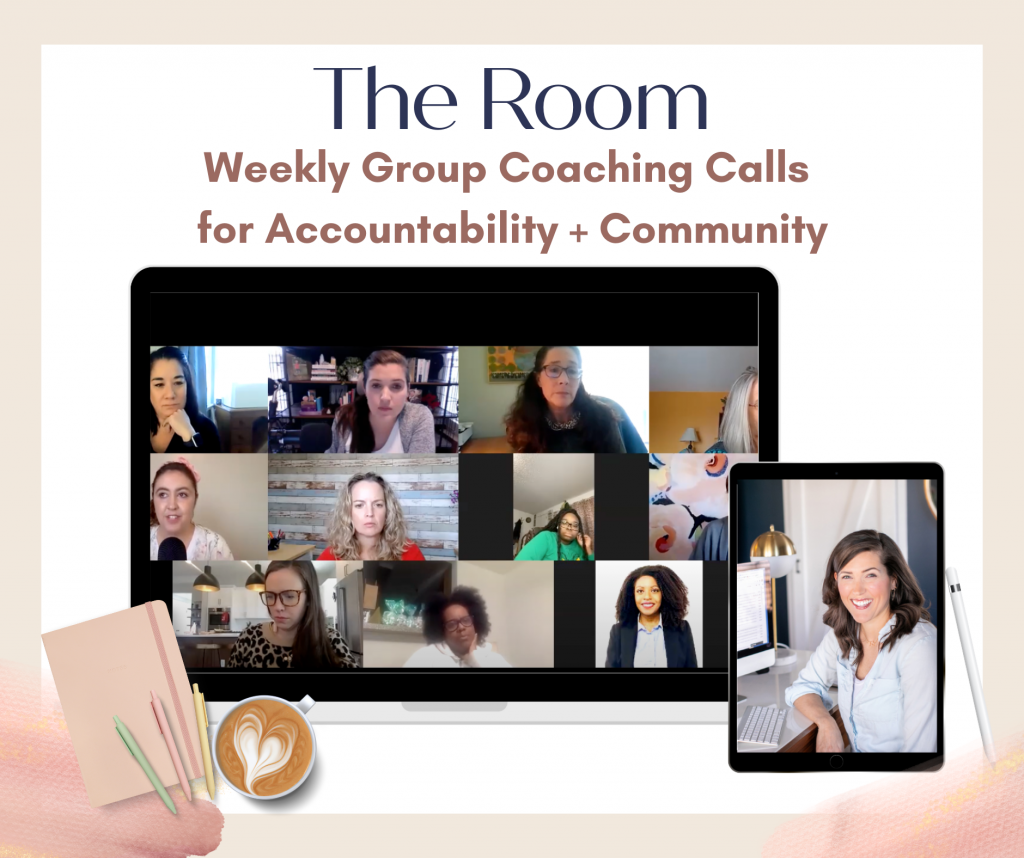
- In The Room, you’ll have a mastermind community and weekly coaching to help you stay accountable, land collabs, and scale visibility into sustainable growth.
Because slow business growth isn’t failure. Most of the time, it’s a traffic problem, not an offer problem. By running the 30-Day Visibility Experiment, you can finally stop guessing and start growing sustainably
Now the only question left is: are you ready to be seen?
How long does it really take for an online business to become profitable?
Most businesses take 2–3 years to become profitable—sometimes longer depending on your industry and business model. While “overnight success” stories get the spotlight, research shows steady growth is the norm. Slow growth is not failure; it’s often the healthiest way to build sustainable systems, refine your delivery, and deeply understand your clients.
How do I know if slow business growth is a traffic problem or an offer problem?
Here’s a simple diagnostic:
– Fewer than 200 qualified visitors to your sales page and low sales → traffic problem.
– 200–400 qualified visitors and zero sales → offer problem.
– 200–400 qualified visitors with 2–10 sales → it’s working! Time to scale visibility.
In our coaching programs, we see that 9 times out of 10, it’s traffic—not the offer.
What is a good conversion rate for online courses, coaching, or digital offers?
Industry benchmarks show that even the best sales funnels convert at 2–5%. That means for every 100 qualified people who view your offer, you can expect 2–5 sales. If you’ve had fewer than 100 views, you simply don’t have enough data yet to judge whether your funnel or offer is “working.”
What visibility strategies actually work for online entrepreneurs?
The most effective visibility strategies aren’t about chasing algorithms—they’re about building long-term discoverability and authority. We recommend:
– Publishing one long-form, search-friendly piece of content per week (blog, podcast show notes, or YouTube transcript).
– Sending one offer-driven email per week with a clear CTA.
– Pitching yourself once per week for visibility opportunities (podcasts, summits, bundles, guest newsletters, collabs).
This 30-Day Visibility Experiment helps you quickly see if slow growth is a traffic issue or an offer issue.


There are juicy deals and insider-only offers that I share only with my email community. If you love a good behind-the-scenes peek, let’s make it official and get you on the Whole Soul List, a sacred pause for heart-centered, ambitious entrepreneurs. See what it's truly like to unsubscribe from the status quo and create a life and business on your terms.
IT'S MORE THAN A LIST; IT'S A MOVEMENT!
Just Between Us 🤫
I’m so ready for this →
I need to learn how to think and strategize like a calm CEO
Yes! Tell me more →
I know what to do, but I'm not doing it. I need accountability!
SOUNDS LIKE ME! →
I need social-free strategies to launch, grow and scale my business
Where are you in your business?

YES, PLEASE!